
December News
Winter Wellness

Plant of the Month
This month’s plant is Pine. Like most edible evergreen trees, it is warming, stimulating, and antiseptic; and has an affinity for the respiratory system making it an effective expectorant for wet, cold coughs or simply as a warming remedy when the chilly damp of winter soaks into the bones.
A row of great big white pines, nearly 100 years old, mark the property line between me and my closest neighbor. For a number of years my partner has been worried that one would fall during a winter ice storm. Last winter several branches came down early in the season, one bashing in the back window of the neighbor’s car. After much discussion and consulting with arborists, we decided to take down the ones that posed the most threat to the houses.
I tend to minimize danger and hadn’t really imagined the damage they could cause if they hit our house; so when the tree guys were bringing down those giants, I was shocked at the force with which they hit the ground. Boom. In one instance a small branch was driven into the ground, piercing the buried electric cables. It was alarming, but also sad. It was a heart-breaking couple of weeks watching the trees—and all the micro-ecosystems they created—be destroyed. I cried. But this summer, we replanted new trees, more than what came down. They are a medley of native varieties, many of which are edible. In addition to my own dreams of foraging magnolia blossoms and juniper berries, I hope that the critters who enjoyed those old pines find their way back to new plant friends.
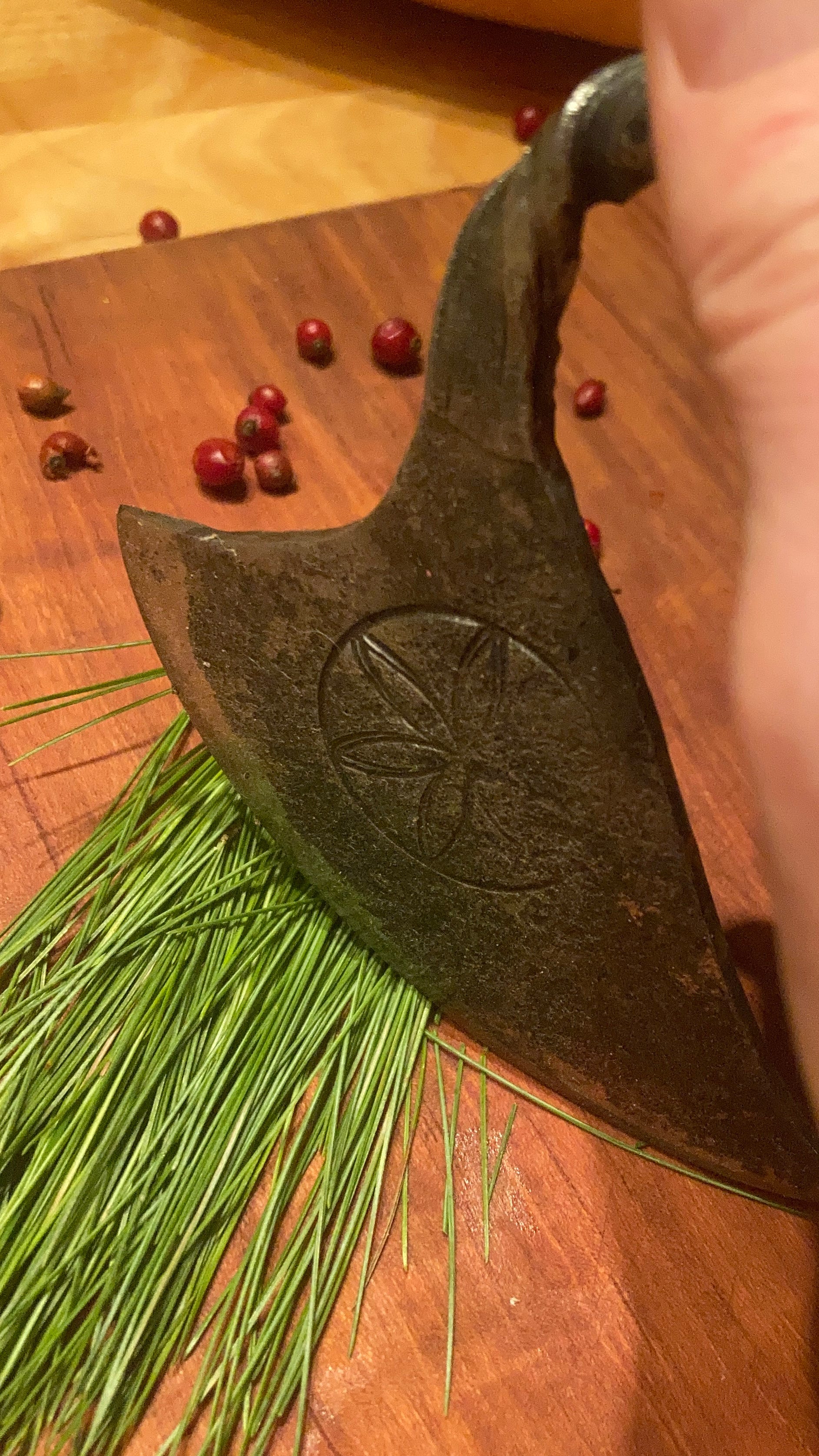
There are several of the old pines out there still, and I have harvested some needles from downed branches to use in herb crafting. Pine is an herb that I haven’t worked with much in the past, but seems fitting for this time of year. I’m infusing some in oil for a salve and collecting needles for tea.
For local folks, plant yoga class focused on Pine is Sunday, Dec. 28th at 4pm. I’ll be serving a pine needle tea, lightly sweetened with honey, for those of you who would like to try this delicacy.
The Wide, Wild Patch
We enjoyed some snow days already. I have dreams of replacing most of the lawn with edible and medicinal plants; so before the winter weather set in, I spread some native, medicinal seed mix. I’m hoping to see more bee balm, skullcap, heal all, cardinal flower and other plants come up in a big patch that was lawn. I covered the grass with big sheets of cardboard in the summer and pulled it away last month to reveal the bare ground. Most native seeds like a long period of stratification (think periods of cold and wet, then warmish, then cold) to stimulate germination in the spring.
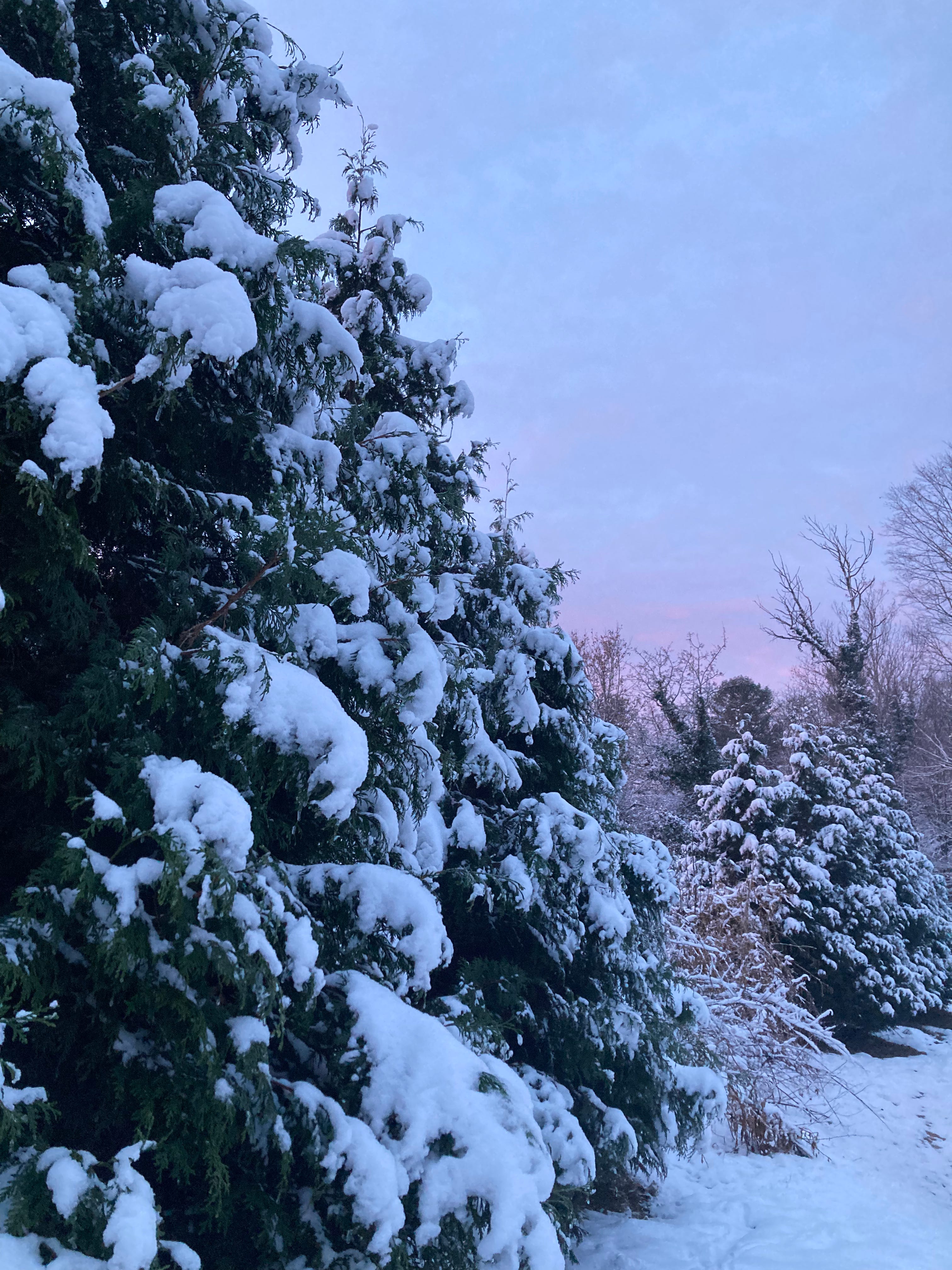
Because I have school-aged children, snow days have meant no school for them. I am a creature of habit and the lack of a predictable schedule has me feeling extremely tired at the end of this week. I have a day to myself this weekend and plan to rest and drink lots of nourishing teas.
What I’m Reading
I’m enjoying Rebecca Beyer’s new, beautifully illustrated book, The Complete Folk Herbal. A couple of years ago I participated in some of her Hedgecrafting courses (based out of North Carolina). She has a master’s degree in ethnobotany and I love how she weaves in scientific and folk knowledge about herbs. She has some serious “off-grid” skills so I feel like I always learn something from her books, not just working with her in person.
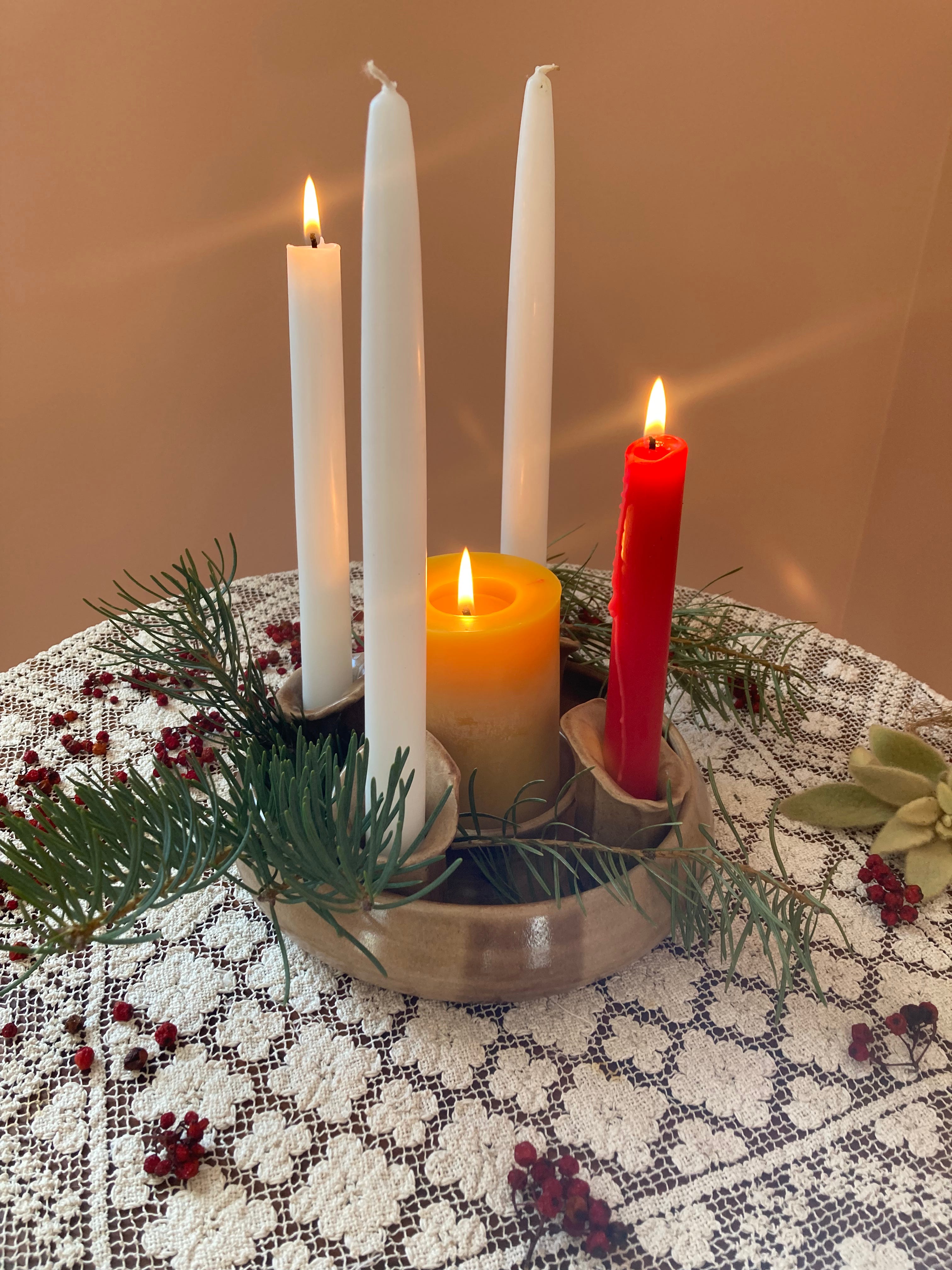
In addition to herbals, I’m reading reflections on solstice season, as is my little December tradition. My “yoga room” is proving to be a very cozy place to read this winter. I have a little table set up with a Solstice Advent wreath, lighting one candle each week—although some years I light them all at the same time because I enjoy the effect so much. In addition to the traditional advent attributes: hope, faith, peace, joy, and love, I like incorporating an elemental approach: air, fire, water, earth, and ether to deepen my meditation. Air is associated with communication and the intellect, for example, and I reflect upon how communion and fellowship, co-creating knowledge with others, gives me hope even in the darkest of hours. Feeling a sense of belonging and community with others is a great balm for hopelessness. In recent years, I have truly expanded that sense of a community to plants, friends who are always near and inspire hope with each new bud, each turning season. Things get better, things change, the plant community teaches us there is always room to hope.

I enjoyed this post very much! It left me feeling calmed and meditative. Brandy, can you share a source or two for your reflections on solstice season? Happy holidays! 🎄💛
So important to create some winter comforts in this heavy time leading up to the Winter Solstice and beyond. I usually feel that energy shift in January. Hang in there!