
May Flowers
...for the Birds & the Bees

Plant Yoga class this month at Santosha: May 24th at 4pm
Plant of the Month
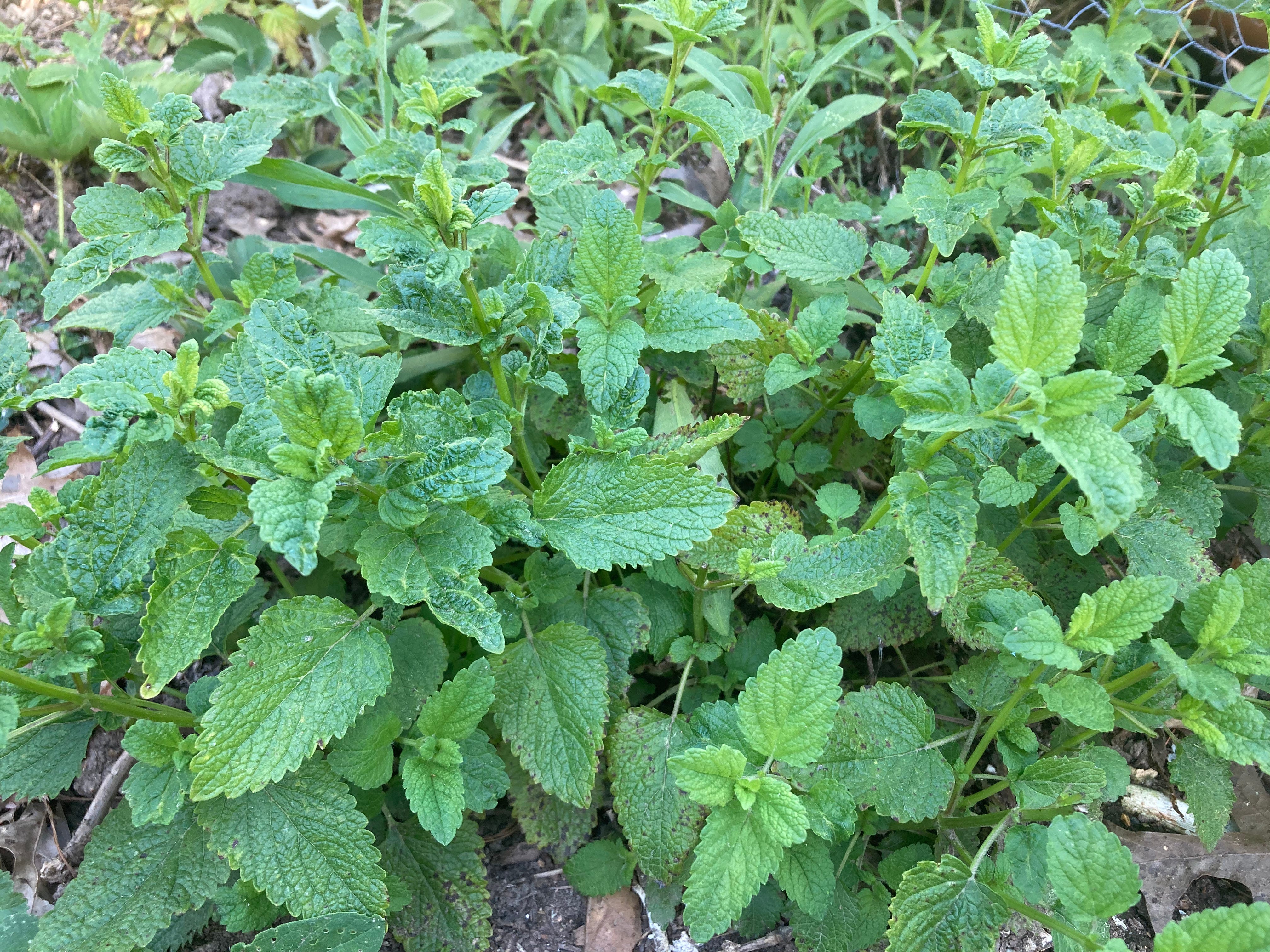
This month I’ll be teaching about Lemon Balm, or Melissa officinalis. Lemon Balm is in the mint family and has a characteristic, uplifting lemon scent. It’s often a runaway in established gardens, but I don’t mind it because I use as much as I’m able to preserve, if not begging friends & acquaintances for more. On more than one occasion I’ve asked my local Buy Nothing group for permission to forage for lemon balm from their gardens. I dry it for tea, make fresh tincture/elixir, and infuse it in oil to make lip balm.
In addition to its delicious aroma and flavor, Melissa, has a host of health benefits and is found in a wide variety of wellness products. A quick search at my university library shows more than 4,000 articles pertaining to research on lemon balm [if you have access to a university library, I urge you to investigate some of the research!]. I won’t be digesting any of the articles here, but I will share some personal testimony of healing. For my entire life I’ve been plagued by cold sores, which emerge whenever I’m sick or exposed to leaf mold. Since working with lemon balm six years ago, I’ve had almost no outbreaks. In addition, it helps keep my mood stabilized and, combined with chamomile or lavender, is a wonderfull addition to sleepy tea. Best of all, my kiddos like both the tea and tincture (I call it elixir because I include honey in the menstrum).
Lemon Balm Elixir: Fill one quart glass jar with fresh lemon balm leaves. Add a half cup of honey. Fill the rest of the jar with vodka or brandy. Top off after a couple of days. Don’t forget to label your jar with date & ingredients—trust me, you will not remember. Let macerate, shaking daily or as often as you can remember. Strain after 1 to 2 months. Be sure to squeeze out the leaves (or use a potato ricer) before composting. Pour the liquid in dropper bottles, or store it in the jar. Take about 1 dropperful or up to ½ tsp as needed.
I use 40% alcohol because that is what I can get locally, but higher alcohol percentages will extract more of the volatile oils apparently. I add the honey under the assumption that it will extract some of the volatile oils as well. Alas, I have not researched this; but again, know that the honey makes a potent tincture for my family.
The Wide, Wild Patch
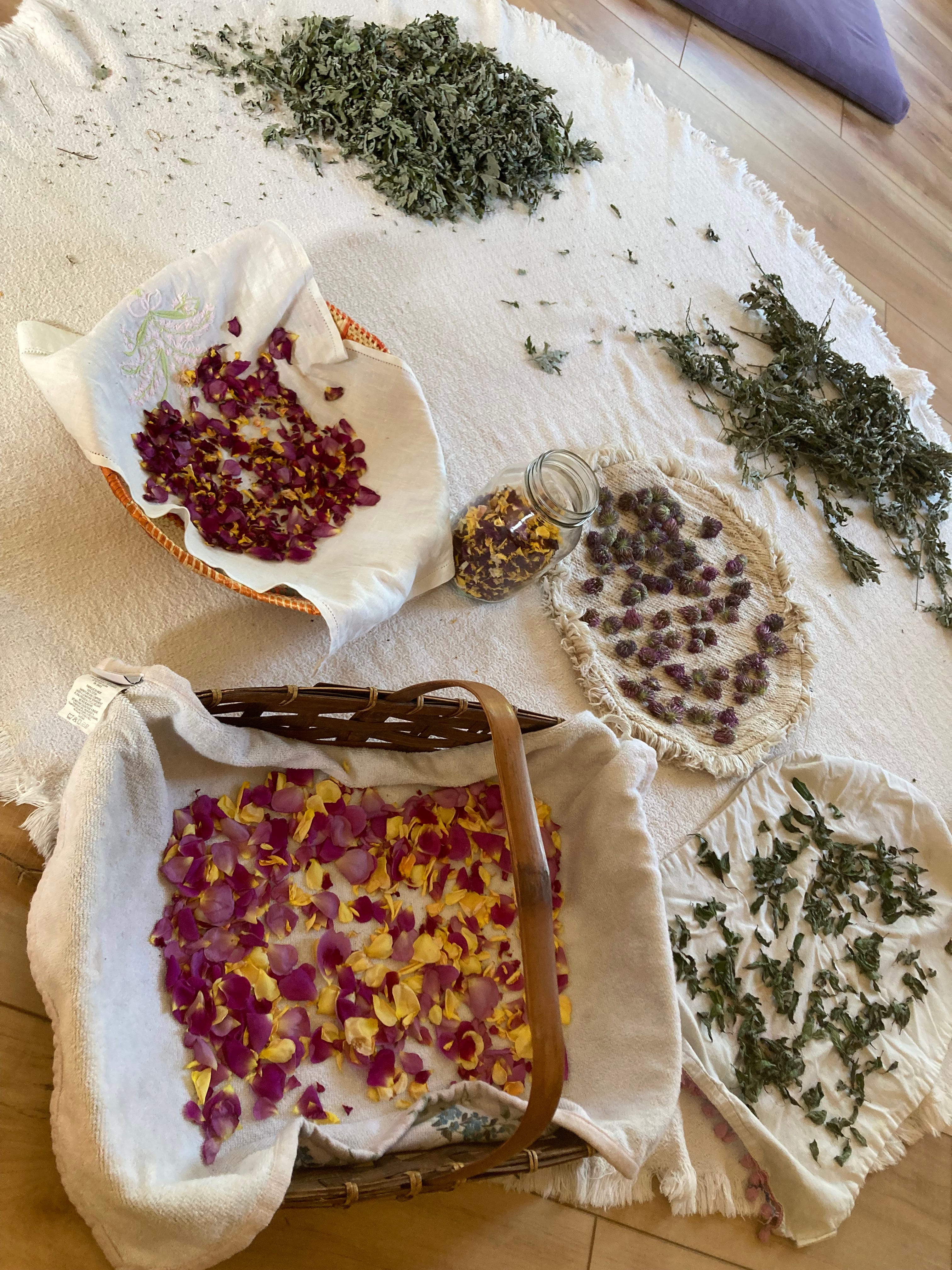
We’ve had some much needed rain and cool weather. Followed by very warm weather this week. So many lovelies are blooming! I’m harvesting lemon balm, rose petals, mugwort, and red clover. And I’m planting all the warm weather seedlings. It’s my favorite time of the year!
What I’m Reading
I’m very slowly working my way through Five Spirits: Alchemical Acupuncture for Psychological and Spiritual Healing by Lorie Eve Dechar. Let me tell you, it is not a casual read and was written for practitioners in mind. I realized last night that I needed to get out my notebook and pen to take notes and process, something I’ve gotten out of the habit of doing. I had a theatre professor once who cautioned us not to attempt reading Shakespeare with a baloney sandwich and a beer—that little quip came to mind while reading Five Spirits. Maybe not the best choice for bedtime reading either. But it is a good book if you’re interested in personal growth and alchemy and are craving something more meaty.
Thank you for this delightful commentary!