November News
Digging Roots

Welcome to the Plant Yoga stack, formerly Cunning & Kind. As you see, I’ve changed the name of my Stack to focus on my plant energy yoga work. The content won’t actually change except that I’m trying my hand at being more intentional and streamlined about bringing this space in alignment with the rest of my life. I’ve been dreaming up a “container” for the plant yoga work I’ve been doing and one of the things others recommend is developing a tagline that encapsulates what you do: mine is “Align Your Inner Garden.” And so as the year ends, I’m looking around at all my loose ends and bringing them into alignment.
Plant of the Month
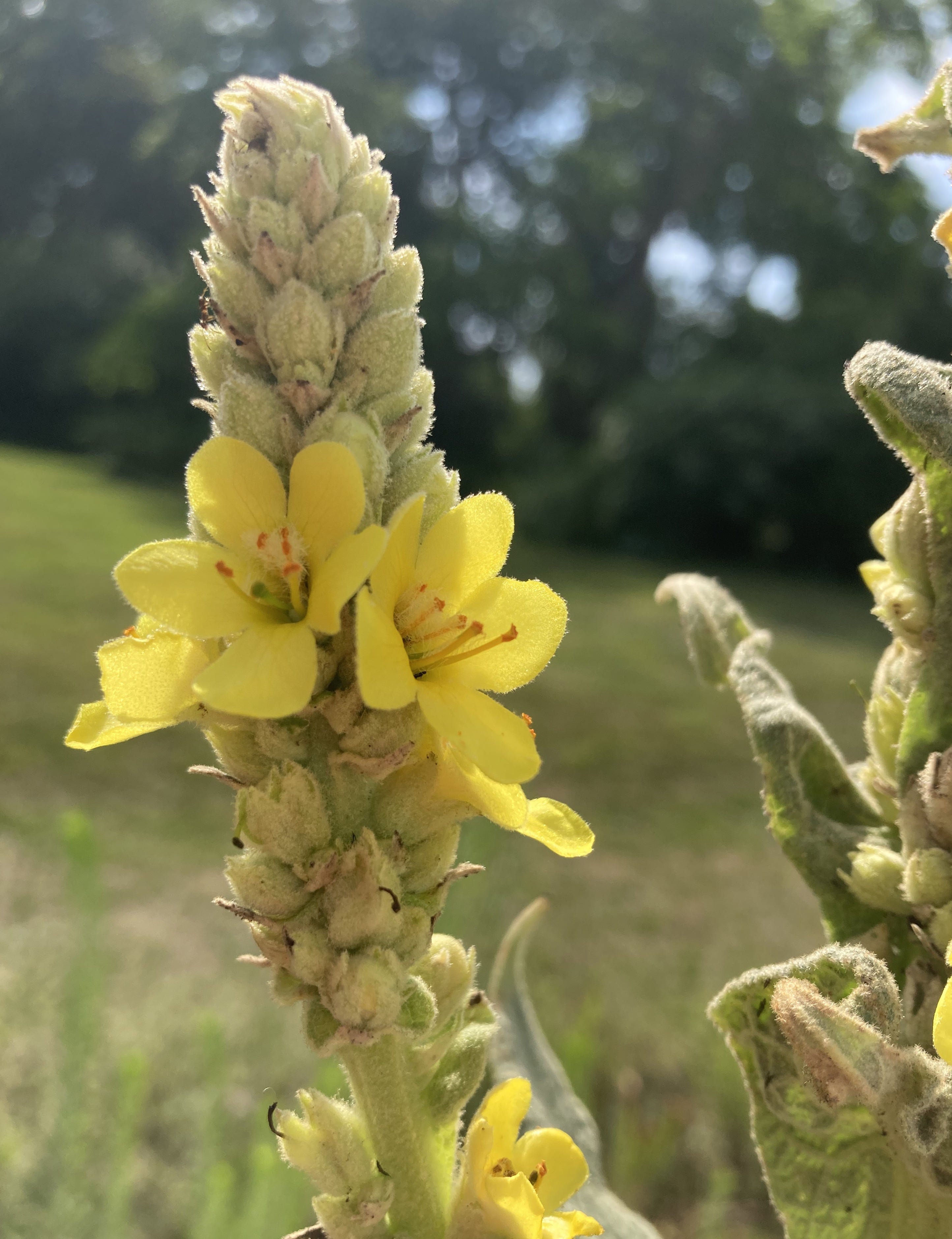
This month’s plant is Mullein (Verbascum thapsus). I’ve had a long, long relationship with mullein; it is one of the first plants I learned to identify as a child. I clearly remember my mother pointing it out on the hillside as we drove up West Fork Rd. I thought it was funny that a plant by that name was growing wild near the home of the Mullins family.
Mullein is a moistening plant that has an affinity for mucosal membranes. It is also an expectorant. These two facts, along with its abundance in our region of Appalachia, make it a beloved home remedy for cold & cough season. Right now is a great time to harvest rosettes and tincture leaves and roots fresh. I like to dry the leaves for tea as well. In my yard, I try to find a patch where a few are growing so that I can leave some to flower in the summer. I tincture and dry the flowers. The flower tincture I combine with the root and leaf concoction so that I end up with a whole plant tincture. Mullein is a biennial, meaning that it makes a rosette during its first year and shoots up a tall, flowering stalk in its second year.
In the kitchen, I’m also formulating tea blends for the winter—I’ve got a couple that are both tasty and healing (not always an easy thing to accomplish!). I’ve packaged some of my favorites for sell at Santosha where I teach Plant Yoga classes. I’m hoping to donate and gift some as well. If, like me, you haven’t been as impacted by the shut downs and loss of services like many in our communities, please consider sharing some of your extras with food banks and churches in your area who are addressing these needs. Plants such as mullein are so, so generous with their gifts and inspire me to act likewise.
If you’re local, I’m teaching a plant yoga class on mullein this Sunday, Nov. 23 at 4pm at Santosha.
The Wide, Wild Patch
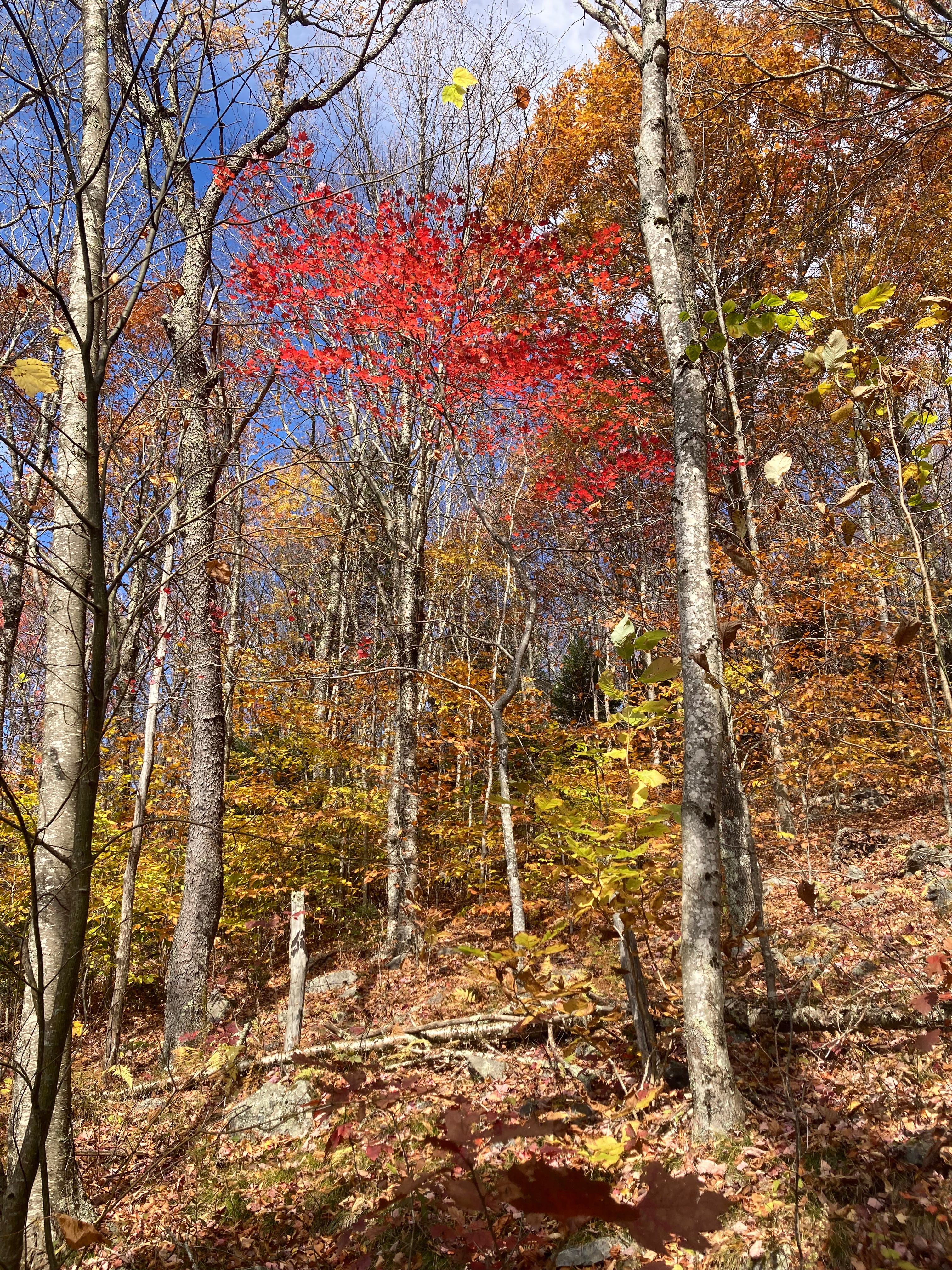
I live on one acre in the heart of a bustling university town (read: student body is larger than our full time small town population); our lot is shaped like a thick piece of pie such that the crust is aligned with our quiet street and appears very wide. A wildflower bed—mostly natives—creates a border. Here the plants are decidedly in winter mode. Although it’s above freezing this week, we’ve have a few frosts so all the fall blooms have faded. Poke stalks and berries are brown and deep purple, making perches for the birds. Also purple are some beauty berries, shining against their arcing bare branches.
I’m collecting seeds from flowering annuals such as zinnia and cosmos, rose hips from multiflora rose on my walks, and, fresh hawthorne berries when I can find them.
Recently I expanded a garden out back with a mountain of mulch from some noble, old pine trees that had to come down last winter. That was a sad time but they were enornmous and in danger of falling on the house. Once the growing season hit I abandoned the mulch pile for lack of time. So I’ve been back at it. I’m hoping that by spring I’ll at least have the lawn grass in that area covered with a layer of cardboard, 6 inches of mulch, plus whatever other organic matter I can get my hands on—eggshells, kitchen compost, leaves. I long for manure.
What I’m Reading
What I’ve been reading this month is The Body Keeps The Score: Brain, Mind, and Body in the Healing of Trauma, by Bessel van der Kolk. Although I was familiar with the premise—because yoga and plants have done so much for me in my own recovery from trauma—I started reading the book because of my day job at the Center for Gerontology at Va Tech. Our team is working on a paper about the long-term impacts of adverse childhood events, particularly how it relates to dementia caregiving in families. It is a slow read, especially the first half of the book. It is triggering and I found myself having it put it down several times and have a good cry. If you’re just interested in the practical bits, I suggest starting with Chapters 12 or 13 about halfway through.
Although it’s been hard reading, I’m at a place in my life now that I can process it and sit with the pain that arises. Its important to remember that recovering from trauma is a life-long journey. For years I just wanted to be better. I wanted the “talking cure,” my therapy sessions, to literally cure me and have it all resolved. But that’s not the way it works. It’s a long, long journey of waking up every day and making choices. And every day—if we’re doing the work—making the choices that align with our higher selves, that align with our imagined future selves, gets a little easier. Making aligned choices gets easier with time. That, my friends, is why I do this plant yoga work.
How Are You Faring?
In the spirit of aligning your inner garden, is there anything you’d like to share that feels inspiring or inspirational in your life, that makes you feel cohesive? Anything you’ve put to bed? Or, alternatively, any wild patches of your life that bring you joy as we head into the winter season?